

Top 8 Attractions along the Silk Road
The Silk Road refers to the route that passes through Central Asia, crosses the Pamir Plateau, and reaches the Middle East, typically referring to the ancient trade route between China and the West. The history of the Silk Road spans more than 2000 years, giving birth to countless attractions along the Silk Road.
Among the Silk Road attractions in China, there are numerous historical and cultural relics such as the Terracotta Army of Emperor Qin Shi Huang, the Mogao Caves in Dunhuang; the Maijishan Grottoes and the Jiayuguan Pass of the Great Wall.
Top 8 Silk Road Attractions You Can’t Miss
For centuries, the natural beauty and cultural richness gathered along the Silk Road have captivated people’s hearts. It has become one of the most attractive themed tourism route to explore the Silk Road attractions among China’s many travel products. So, what to see on the Silk Road?
Mogao Caves in Dunhuang
- Location: Mogao Town, Dunhuang 736200, China
- Type: World Heritage Site; Religious Sites; Caves
- Best time to visit: Summer & Autumn
- Ticket: Peak Season (4.1-11.30): ¥238-¥50 / Off Season (12.1-3.31): ¥140-¥40
- Best for: History Lover; Family
√ Recommended tours:
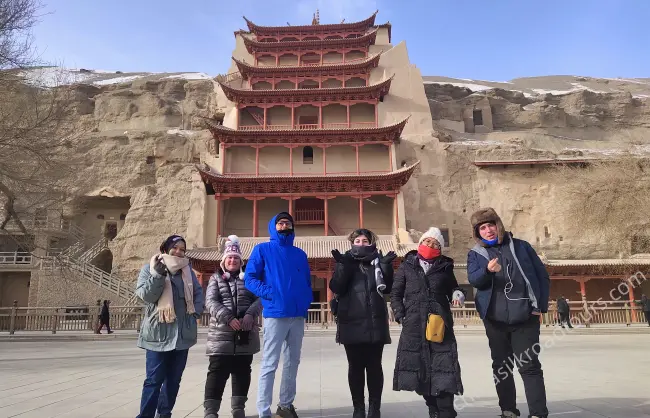
The Mogao Caves, commonly known as the “Caves of the Thousand Buddhas,” are the representative cave complex in the Dunhuang grottoes. Located on the cliffs at the foot of the Mingsha Mountains in Dunhuang City, Gansu Province, a long plank road connects the various caves, big and small. As a treasury of art, this Silk Road tourist attraction feature artistic styles from different eras, creating a vibrant panorama. The Tang Dynasty art of Dunhuang represents the most brilliant period of Chinese Buddhist art, where foreign artistic influences seamlessly blended with Chinese national art.
Terracotta Army in Xi’an
- Location: Lintong District, about 40 kilometers northeast of downtown Xi’an
- Type: Archaeological Site; Mausoleum
- Best time to visit: Spring & Autumn
- Ticket: 120 yuan per person
- Best for: History Enthusiasts; Families
√ Recommended tours:
- 5 Days East Part Silk Road Tour of Xian and Luoyang
- 10 Days Silk Road Tour from Xian
- 11 Days China Silk Road Tour with Kanas
The “Underground Army” of Emperor Qin Shi Huang’s Mausoleum, the Terracotta Warriors, which had lain dormant for over 2,000 years, shocked the world upon its discovery. It is one of the most important archaeological finds of the 20th century among the Silk Road attractions.
In 1987, UNESCO inscribed the mausoleum of Emperor Qin Shi Huang (including the Terracotta Warrior pits) on the World Heritage List. Remains of walls, gates, roads, and the mausoleum village reflect the profound impact of the ancient Chinese concept of “treating the dead as the living” on imperial tomb systems.
Mt. Huashan in Huayin
- Location: Huashan Town, Huayin City, Weinan City, Shaanxi Province, China
- Type: Mountain; Sightseeing Place; Historical & Cultural Site
- Best time to visit: April – October
- Ticket: 160 yuan per person from March to November, and 100 yuan per person from December to February
- Best for: Adventure Seekers; Hikers
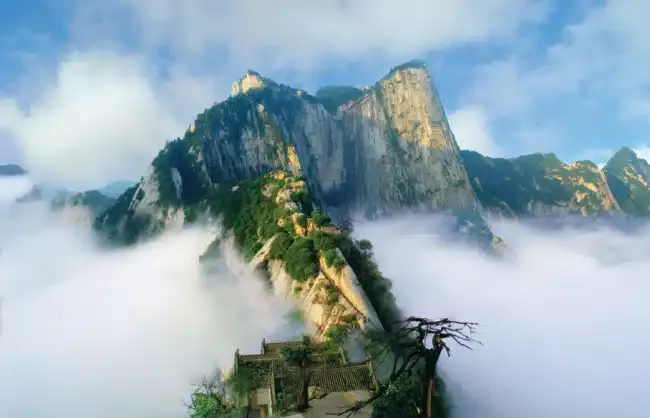
Huashan Mountain, in Huayin City, Shaanxi Province, overlooks the Yellow River to the north and connects to the Qinling Mountains to the south. Known for its “flower-like” shape, this Silk Road attraction is also called Taishan due to its proximity to Mount Shaohua. Famous for its steep peaks, deep valleys, perilous paths, and unique rocks, the mountain enjoys a natural beauty and cultural heritage that are perfectly combined.
White Horse Temple in Luoyang
- Location: No. 6 Luobai Road, Baima Temple Town, Luolong District, Luoyang, Henan Province
- Type: Buddhist temple
- Best time to visit: April to June and September to November
- Ticket: 35 yuan
- Best for: History Lovers; Culture Enthusiasts
√ Recommended tours:
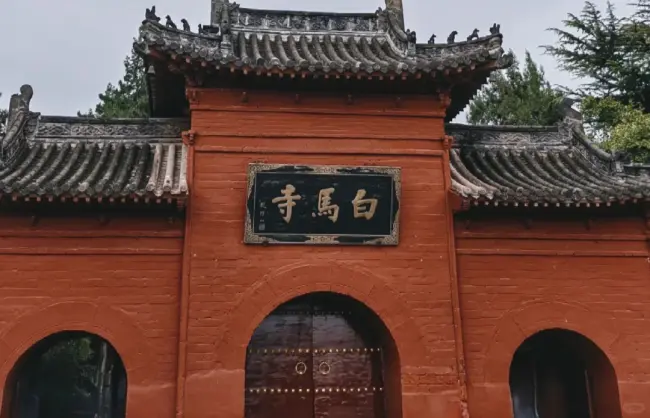
In the lush greenery of ancient trees in the eastern suburbs of Luoyang, the ancient capital of thirteen dynasties in Henan, stands the White Horse Temple, a Silk Road Buddhist attraction. It is known as the first Ancient Temple in China. Built over 1,900 years ago between Mang Mountain and the Luo River, the majestic halls and towering pagodas in the temple have attracted visitors from all over the world.
Jiayuguan Pass
- Location: 6 kilometers southwest of Jiayuguan City, Gansu Province
- Type: Historical Military Fortification; Historical Site
- Best time to visit: May – October
- Ticket: 110 yuan
- Best for: History Enthusiasts; Architecture Lovers
√ Recommended tours:
Jiayuguan is the western starting point of the Great Wall in the Ming Dynasty. Along with nearby wall sections, trenches, fortresses, and beacon towers, this attraction along the Silk Road forms a tight military defense system and is known as the First and Greatest Pass Under Heaven. Jiayuguan Fortress is among China’s first batch of nationally protected cultural heritage sites and was included in the country’s first list of World Cultural Heritage sites in the 1980s.
The Heavenly Lake of Tianshan
- Location: Fukang City, Changji Hui Autonomous Prefecture, Xinjiang
- Type: World Natural Heritage Site; Landmarks; Nature & Parks
- Best time to visit: May – October
- Ticket: 95 yuan from April to October, and 45 yuan from November to March
- Best for: Nature lovers; Hikers; Photographers
√ Recommended tours:
- 4 Days Urumqi Leisure Tour of Xinjiang with Heavenly Lake
- 9 Days Xinjiang Kanas Lake Tour from Urumqi
Heavenly Lake of Tianshan, a beautiful Silk Road attraction historically known as Jade Pool, is a scenic high-mountain lake located in Fukang City, Changji Hui Autonomous Prefecture, Xinjiang Uygur Autonomous Region. This attraction on the Silk Road stands as a typical mountainous natural landscape in the arid northwest of China. Surrounded by dense spruce forests with snow-capped peaks, the scenery here is incomparably spectacular. That’s what makes it a renowned summer retreat and tourist destination.
National Geopark of Zhangye
- Location: Sunan and Linze counties within the prefecture-level city of Zhangye, Gansu
- Type: World Geopark; Geological Wonders
- Best time to visit: May to October
- Ticket: 74 yuan per person
- Best for: Ature Lovers, Hikers, Photographers
√ Recommended tours:
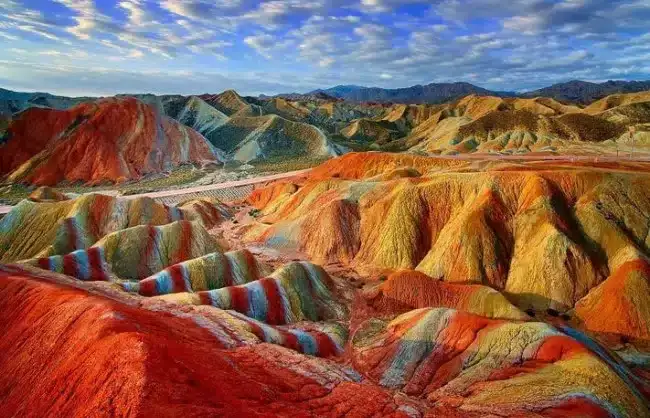
Zhangye National Geopark has the most representative Danxia landform among various Silk Road attractions in northern China’s. With vibrant colors, striking visual appeal, and vast expanse, Zhangye National Geopark ranks as the most spectacular scenic area of its kind in China. Combining grandeur, steepness, uniqueness, serenity, and beauty, it has been praised as China’s greatest Colorful Hills. Now a national 5A-level tourist attraction and a UNESCO Global Geopark, it has been recognized as one of China’s Seven Most Beautiful Danxia Landforms.
The Ancient City of Gaochang
- Location: Sanbao Town, about 40 kilometers east of Turpan, Xinjiang Uygur Autonomous Region
- Type: Archaeological Site; Ancient Monuments; World Heritage Site
- Best time to visit: April to October
- Ticket: Peak season (Mar. 1st – Nov. 30th): 196 yuan for a 4M combined ticket。
Low season (Oct. 21st – Apr. 20th): 129 yuan for a 4M combined ticket。
- Best for: History Enthusiasts; Archaeology Lovers
√ Recommended tours:
The Ancient City of Gaochang lies on the northern edge of the Turpan Basin, covering an area of 2 million square meters. According to Beishi·Gaochang Zhuan, the city was named Gaochang due to its high terrain and flourishing population. Standing at the city, it is hard to imagine that this among various Silk Road attraction holds such a vast, buried history.
Hidden Gems Along the Silk Road
Jiaohe Ruins in Turpan
- Location: Yar Town, 10 kilometers west of Turpan City in the Xinjiang Uyghur Autonomous Region
- Type: Archaeological Site; Ancient City; UNESCO World Heritage Site
- Best time to visit: April to June and September to November
- Ticket: 70 yuan
- Best for: History Enthusiasts; Archaeology Lovers
√ Recommended tours:
The Jiaohe Ruins are an important urban site on the Silk Road from the 2nd century BC to the 14th century AD. Among the various Silk Road attractions, it has the best-preserved, longest-lasting, and largest earthen structure ancient city architectural complex in the world. Over more than 1,000 years, it has been the political, economic, military, cultural, and garrison activity center of the ancient Western Regions of China in Turpan. To this day, the ancient city area still preserved many precious remains.
The Old City of Kashgar
- Location: No. 10 Yawage Road, Kashgar City, Xinjiang Uyghur Autonomous Region
- Type: Ancient City; Cultural Heritage
- Best time to visit: April to June
- Ticket: Free for entrance
- Best for: History Enthusiasts; Culture Explorers
√ Recommended tours:
- 8 Days Xinjiang Urumqi Korla Kuqa Aksu Kashgar Tour
- 10 Days Best Silk Road Tour from Lanzhou to Kashgar
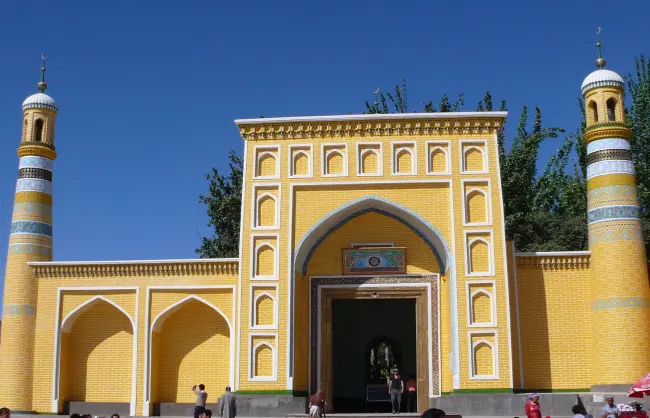
When traveling to Xinjiang exploring Silk Road attractions, you may often hear this: “For scenery, visit the northern Xinjiang; for charm, get to the southern Xinjiang.” The “charm” here particularly refers to the Old City of Kashgar. As a key town on the Silk Road for a thousand years, Kashgar has a history of more than 2,000 years since its establishment. Over the centuries, the confluence of Eastern and Western cultures has made Kashgar an alive ancient city.>>Discover goods traded on the Silk Road that make this city thrive.
The Crescent Lake in Dunhuang
- Location: 6 kilometers south of Dunhuang City in Gansu Province
- Type: Natural Wonder
- Best time to visit: May to October
- Ticket: 60 – 120 in different seasons
- Best for: Nature Lovers; Photographers
√ Recommended tours:
- 17 Days China Silk Road In-depth Exploration Tour
- 13 Days China Silk Road Culture & Sightseeing Tour
The Crescent Lake is nestled in the embrace of the Mingsha Mountain, named for its shape that closely resembles a crescent moon. During the Han Dynasty, it was called the Sand Well, known as the Medicine Spring in the Tang Dynasty, and began to be called Crescent Lake in the Qing Dynasty.
Related reading: Top Reasons to Visit the Silk Road
Planning Your Silk Road Adventure: Tips for Visiting Top Attractions
Best Time to Visit Silk Road Attractions
The best time to travel along the Silk Road vary depending on the city. In spring, Xi’an and Zhangye are the most desirable cities to stay. In Xi’an, the spring days are sunny with moderate temperatures, so it is perfect to visit the Terracotta Army and the Ancient City Wall. While in Zhangye, the Danxia landforms are stunningly colorful against the backdrop of spring.
In summer, Urumqi and Dunhuang are great choices. Summer in Urumqi is marked by blooming wildflowers and the fragrance of melons and fruits, and in Dunhuang by the magnificent views of the Mogao Caves and Echoing-Sand Mountain.
Jiayuguan Pass and Kashgar are the most charming for autumn, when the sky is azure in Jiayuguan and the climate allows for a better experience of local customs and traditions in Kashgar.
In winter, visit the Crescent Lake. Despite cold, Crescent Lake in Dunhuang has a unique charm in the quiet of winter.

How to Choose an Itinerary for a China Silk Road Journey
If you are planning a China Silk Road tour, the first step is to determine how long your journey will last. Generally most people will try a 10-15 day in-depth Silk Road tour, and an 8-day condensed version also works well for those with limited time or budget.
For an immersive route, you can begin with the Xi’an tours, passing through major Silk Road cities such as Dunhuang and Urumqi. Along the route, you can explore UNESCO World Heritage Sites such as the Terracotta Warriors, Mogao Caves, Zhangye’s rainbow-hued Danxia landforms, and Kashgar’s Old Town.
In terms of transportation, it is recommended to take a chartered vehicle. A chartered car allows for flexible connections between these iconic Silk Road attractions such as the Ancient City Wall in Xi’an, the beacon towers at Jiayuguan, and the Tianchi in Xinjiang.
Visa Requirements & Travel Permits
Foreigners traveling to China for Silk Road attractions need to be aware of several visa-related points. First, what type of visa you need depends on the purpose of your visit. For example, if you are for tourism purpose, you will need a tourist visa (L visa).
It is also essential to apply for the visa in advance through a Chinese embassy or consulate in your home country. The application process involves document submission such as visa application form, a valid passport, a recent passport-sized photo, and sometimes additional documents like a travel itinerary or hotel reservation.