

The Silk Road History: A Legacy of Trade and Culture
The Silk Roads, historic Eurasian trade routes, continue to intrigue. Originally describing specific east-west paths 2,000 years ago, the term now includes diverse exchanges beyond silk. The Silk Road history spans from the Bronze Age to the Age of Discovery, involving various products and routes.
Naming of the Silk Road
The Silk Road history originated in China, where the people here took the first steps. However, the term “Silk Road” was coined by a German, Ferdinand von Richthofen, a Prussian nobleman and geologist. Intrigued by Asia, he joined a Prussian expedition in 1860 to explore trade prospects with China, Japan, and Southeast Asia. His travels across Eurasia were extensive and academically fruitful.
Richthofen was particularly drawn to China, then still largely closed to the outside world, and decided to conduct an in-depth exploration of this ancient and mysterious land. Between 1868 and 1872, he visited 13 of China’s 18 provinces, facing numerous dangers during a time of civil unrest. He interacted with locals, documenting his observations and experiences.
Upon returning to Germany, Richthofen studied his extensive notes and published a five-volume work titled “China,” which brought him international acclaim. In this work, he highly praised Chinese silk, calling it “the splendid dawn of the East,” and introduced the term “Silk Road” to describe the ancient trade routes from China to Central Asia and beyond.
Silk Road Definition in World History
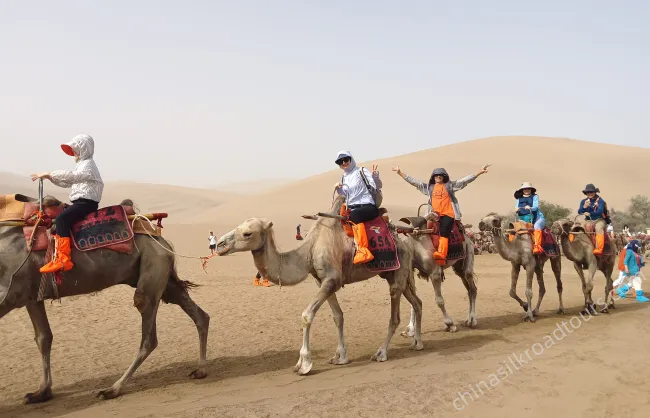
In 1877, German geographer Ferdinand von Richthofen first coined the term “Silk Road.” He defined it as the trade routes connecting China to Central Asia and India via silk trade from 114 BCE to 127 CE, following Zhang Qian’s diplomatic missions. The name quickly gained acceptance among scholars, and its meaning has since evolved.
German scholar Albert Herrmann later suggested extending its definition to include routes to Syria. Chinese scholar Lin Meicun defined it as the cultural exchange path from the Yellow and Yangtze River basins to North Africa and Europe via India and Central Asia, primarily through silk trade. Besides the main overland route, the grassland and maritime Silk Roads are significant branches, sometimes rivaling the main route in importance.
Different scholars, with varying academic backgrounds, have differing views on the Silk Road due to diverse focuses, theoretical frameworks, and research methods. This has led to a range of interpretations of its historical significance. Some scholars regard it as a “great passage for culture and commerce,” “the main axis of world history,” and “the cradle of major world cultures.”
Related reading: What was Traded on the Silk Road
Major Hubs along the Silk Road
The Silk Road stretched from Europe through Egypt, Somalia, the Arabian Peninsula, Iran, Afghanistan, Central Asia, Pakistan, India, Sri Lanka, Myanmar, the Java Islands, the Philippines, and all the way to China.
Uzbekistan Silk Road History
Among these regions, Uzbekistan sits at the crossroads of Central European and Central Asian trade routes, linking East-West commerce and cultural exchanges.
As early as 138 BC, the Han Dynasty of China began external communications via the Silk Road. Over 2,000 years ago, Zhang Qian’s diplomatic mission to the Western Regions brought him to the Fergana Valley in Uzbekistan, marking the beginning of Sino-Uzbek cultural and trade interactions. Uzbekistan, as the pearl at the junction of the Eurasian continent, has witnessed centuries of merchants, missionaries, and conquerors bringing new cultures, religions, and crafts.
Dunhuang Silk Road History
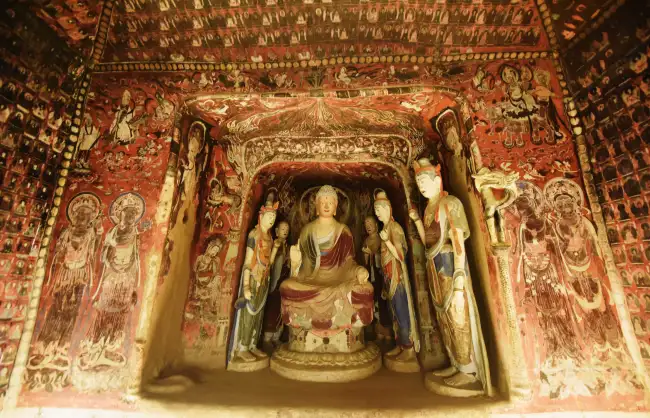
Dunhuang, one of China’s famous historical and cultural cities, anciently known as Shazhou, is located at the western end of the Hexi Corridor. During the Sixteen Kingdoms period, with the efforts of a large number of refugee monks and aristocratic families, Buddhism in Dunhuang developed rapidly. Later, Dunhuang became a necessary route for monks entering and leaving China. Its long history has given birth to a brilliant ancient culture, with numerous cultural relics, vast literature, exquisite grotto art, and mysterious landscapes…
One of the prime example of Dunhuang’s cultural heritage is Mogao Caves, also known as the “Thousand Buddha Caves”. Located about 25 km (15 mi) from Dunhuang City, the Mogao Caves house a large area of cave-wall murals covering Buddhist history, legends, and social life.
Xi’an Silk Road History
Xi’an is an ancient capital and the eastern starting point in the history of the Silk Road. Xi’an (formerly known as Chang’an) has always been an important transportation hub for travelers coming to and from China, Central Asia, and Arabia, and it serves as a cultural bond where diverse ethnic groups and religions coexist.
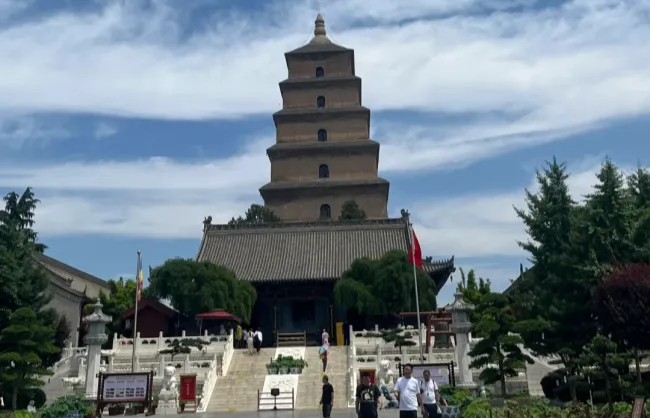
Located in central Shaanxi Province, its superior geographical location has made it the imperial capital for thousands of years and a must-visit destination in the China Silk Road travel. Xi’an is home to many culturally rich attractions, such as the Bell Tower and the Giant Wild Goose Pagoda. Besides, it is where visitors can also savor a variety of Silk Road cuisine, like roujiamo and paomo. All these will greatly enhance the travel experience along the Silk Road.
Venice Silk Road History
Venice, located in the center of a lagoon on the northeastern coast of Italy, was a principal city of power in the medieval and early modern world and a significant city in the development of trade routes from the East to Europe. With its unique geographical position, Venice has become an important node city on the map of the “21st Century Maritime Silk Road.”
The city onece played a crucial role in Central European trade and cultural exchanges; today, the Belt and Road Initiative has once again closely linked Venice with China. To embark on the Silk Road tours, Venice will be a good starting point.
Kashgar Silk Road History
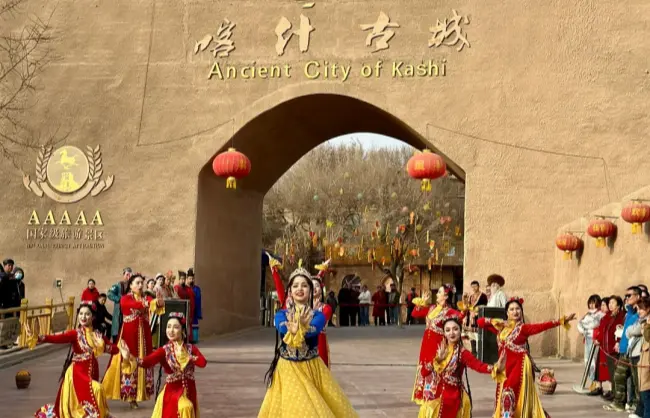
The renowned city of Kashgar, located at the far western frontier of the motherland, is a significant commercial hub on the ancient Silk Road, with a recorded history spanning over 2,100 years. It has a long history of trade with Central Asia, South Asia, West Asia, and even Europe. Always a bustling international marketplace attracting merchants from around the world, it was known for its prosperity and was hailed as the ‘Eastern Cairo.”
Why Was the Silk Road Important Part of Chinese History
In the minds of the general public, the Silk Road often conjures images of an exotic holiday journey, passing through countries like China, Uzbekistan, Kyrgyzstan, Tajikistan, Kazakhstan, and Turkmenistan. However, China Silk Road history holds immeasurable value, evident in its cultural significance, academic research value, and tourism potential.
Trade Promotion
Throughout the Silk Road history, it has facilitated the exchange of goods, such as Chinese silk, tea, and porcelain. This trade enriched daily lives and spread technologies like iron smelting and well-digging to the West, enhancing production levels. It also promoted political ties between China and the West, with envoys from various states visiting China. Religions such as Buddhism, Zoroastrianism, Manichaeism, and Nestorianism traveled along the Silk Road, influencing beliefs across Asia.
Exchanges Facilitation
The ancient Silk Road facilitated the interactive dissemination of scientific and technological knowledge, widely and profoundly promoting production advancements and even social transformations in the countries along the route. It served as a vital platform for China’s scientific and technological exchanges with these nations.
Before the European Industrial Revolution, China’s ancient Four Great Inventions and iron smelting techniques were transmitted to the West via the Silk Road. They later became significant factors in driving the transformation of capitalist production methods. In addition, the ancient Silk Road promoted diverse cultural exchanges, serving as an important bond for the mutual influence and tolerance among different countries, races, and civilizations in the East and West. The ancient Silk Road and the Maritime Silk Road were pathways of civilization where different ethnic groups and cultures interacted and integrated, spanning dozens of countries across Asia, Europe, and Africa, connecting and blending ancient civilizations such as Chinese, Indian, Egyptian, Persian, Arabian, and Greek and Roman civilizations.
What Promotes Exchanges along the Silk Road
The Silk Road is renowned for its luxury goods but was more than just a silk trade route. Economic and commercial interests drove exchanges, and rare items like silk, ceramics, and exotic foods were traded.
Throughout the Silk Road history, guides in various languages directed travelers to the best markets. Producers and tax collectors benefited, and rulers had to balance revenue with commerce promotion. The Mongols, despite their reputation as conquerors, were adept administrators, fostering harmony across diverse groups. Similar were the Arab Caliphates, Indian Mughals, Persian Safavids, and the Ottoman Empire, all recognizing the benefits of tolerance and diversity.
Religion was another key driver for exchanges in the Silk Road history, with new faiths introduced through various means. Monks and priests traveled extensively, as did notable figures like Xuanzang, and Marco Polo, embodying the Silk Road’s spirit of travel and exchange.
What to Do When Traveling to the Silk Road
Whereas the Silk Road ancient history features diverse cultures and commerce, the Silk Road new history is marked by a renaissance of connectivity. Modern infrastructure breathes new life into the ancient trade routes, fostering cultural exchange and economic growth across Eurasia.
Immerse in the Cultural Feast
The culture and history of the Silk Road highlights the uniqueness of western tourism resources, driving regional development. The cultural tourism along the Silk Road, as a key carrier for inheriting the Silk Road culture, aligns well with current tourism trends. China Silk Road travel encompasses ancient capitals like Chang’an (Xi’an), Luoyang, and the Hexi Corridor; Buddhist grottoes such as the Mogao Caves, Maijishan Grottoes, and Yulin Caves; historical passes like Yangguan, Yumenguan, and Jiayuguan; and natural landscapes of Xinjiang’s deserts, oases, and snow-capped mountains.
Savor the Silk Road Cuisine

The Silk Road was not only an economic and trade route connecting the Central Plains with the outside world, but also a path to experience and savor the ancient Silk Road cuisine.
When it comes to Silk Road cuisine, dishes like Turkish kebabs, Xinjiang pilaf, big plate chicken, naan, Xi’an roujiamo, and grilled lamb are must-tries. If you embark on a China Silk Road travel, be sure to taste these culinary delights while also exploring the local culture and history, and immerse yourself in the charm of the Silk Road.
Ride the Silk Road by Train
Traveling the Silk Road by train offers comfort and charm. Though slow in the past, new investments in high-speed trains and stations are improving the experience. Train travel remains cheaper, more ecological, and less prone to winter disruptions compared to planes and buses.