

Savor the Silk Road Food: A Gastronomic Odyssey Through Timeless Flavors
Throughout history, cuisine has always been a “pioneer” in the exchange of civilizations, connecting the past and the future, and bridging hearts and public sentiment. As the “Belt and Road” initiative continues to gain traction, the Silk Road food trade also grows. The Silk Road is not only an economic and trade route that connects domestic and international markets, but also a path marking the trace of Silk Road cuisine. It is where one can experience and savor the splendid Silk Road food cultures.
Silk Road Shaanxi Cuisine
Shaanxi holds an important position in the history of Chinese cultural development, with the culture of silk road food traced back to the Yangshao Culture period. Based on a favorable economic and cultural conditions, Shaanxi cuisine draws on the essence of dishes from various regions, and incorporates the flavors of ethnic delicacies. As a result, it is renowned for a diverse range of Silk Road cuisines, distinct flavors, ancient charm, and enduring appeal.
- Where to Eat: Chang’an Town Old Xi’an Restaurant
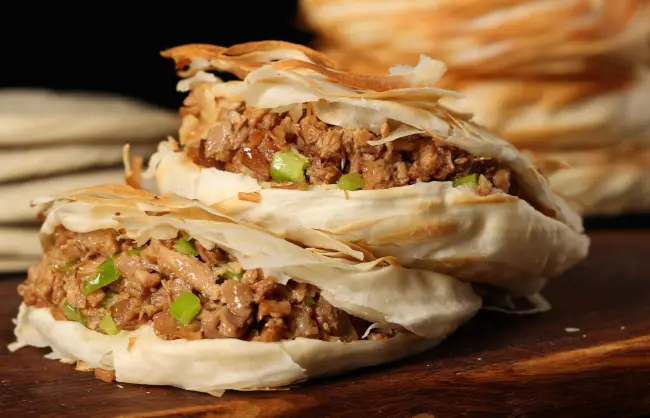
Roujiamo (肉夹馍)
Roujiamo is a famous food along the silk road originating from Shaanxi. Xi’an Roujiamo is made by combining white baked flatbread with cooked pork. The white baked flatbread, characterized by its golden ring, tiger back, and chrysanthemum heart, is crispy on the outside and tender on the inside. The cooked pork is fragrant and glutinous, with abundant juice that leaves a lingering aroma on the lips and teeth. The two ingredients create a perfect match made in heaven.
- Where to Eat: Fanji Braised Pork with Cured Sauce
Silk Road Uyghur Cuisine
Xinjiang cuisine along the Silk Road possesses the characteristics of halal cuisine and features the rich and fragrant cooking style of the Chinese northwest cuisine. The main ingredients include vegetables, melons and fruits, fish, meat, and eggs. This Silk Road food is created based on the halal cuisine system, with a preference for beef and mutton. Cooking methods such as stir-frying, grilling, hot pot, braising, saucing, roasting, and steaming are often employed, offering a salty and spicy taste.
Xinjiang Big Plate Chicken (新疆大盘鸡)
Xinjiang Big Plate Chicken is a very famous Xinjiang cuisine along the silk road, belonging to the new-style variety of halal snacks that are consumed in a communal dining manner. This silk road food is so named because it is served in a large plate with chicken pieces and has been popular in Xinjiang for nearly 10 years. The Big Plate Chicken is usually served with white-skin noodles, which are cooked in the remaining sauce after the chicken pieces are finished, contributing to a delicious memory for people traveling to the silk road.
- Where to Eat: Beiyuanxiang Restaurant
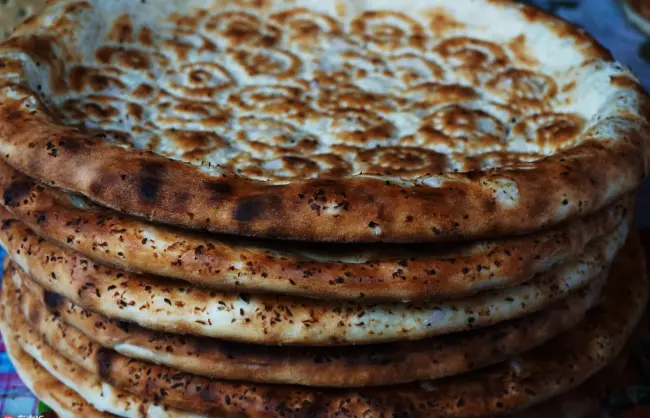
Nang/Naan (馕)
Nang, or Naan, used to be called “Hu Bing”, is a round flatbread made by baking. The snack has a history of over two thousand years in Xinjiang and is a main delicacy in the Silk Road Uyghur cuisine. It is recorded in many historical documents concerning Silk Road food in China. As early as over a thousand years ago, people in Turpan have been able to make exquisite and delicious nang.
- Where to Eat: Enjoy this silk road food in the Nang street in Yining City, where there are 60 shops selling nang.
Lamb Pilaf (手抓饭)
Lamb Pilaf is a silk road food from Central and West Asia and is very popular in the Uyghur and Uzbek cuisine along the Silk Road. It is a traditional delicacy of the Uyghur people in Xinjiang, with unique flavors and cultural significance. This dish of the special Silk Road cuisine offers a rich taste and distinctive flavors, such as the fragrant mutton, nutritious carrots and onions, and the uniquely textured rice.
- Where to Eat: Fenghuiyuan Restaurant

Silk Road Gansu Cuisine
Long cuisine, also known as Gansu cuisine, is the traditional cuisine of Gansu Province, represented mainly by Lanzhou. The local diet is heavily influenced by the customs of nearby ethnic groups such as the Hui and Tibetan. Noodles and meats are mainly the staple foods, paired with beef and mutton. As part of the China Silk Road travel, exploring Long cuisine offers a unique culinary experience that reflects the diverse cultural influences along the historic trade route.
Hand-grabbed Mutton (手抓羊肉)
Hand-grabbed mutton is a common traditional delicacy in the northwest and plays a significant role in the lives of local people. When it comes to the most authentic silk road food in Gansu, the Linxia area is definitely on the list. The Dongxiang hand-grabbed mutton is the most representative. There are various ways to enjoy the hand-grabbed mutton, but whatever method is surely deeply loved by the locals.
- Where to Eat: Zhonghua Hand-Grabbed King Restaurant
Lanzhou Noodles (兰州牛肉面)
Lanzhou beef noodles, also known as Lanzhou clear soup beef noodles, are one of the “Top Ten Noodles in China” and are a local delicacy in the Lanzhou area of Gansu Province. This famous food along the Silk Road features clear and mellow beef soup, pure white radish, bright red chili oil, bright green garlic sprouts and cilantro, and bright yellow noodles. As an important stop on the China Silk Road tour, when visiting Gansu to admire the Mogao Caves in Dunhuang, be sure to taste Lanzhou noodles.
- Where to Eat: Mazilu Beef Noodles

Tianshui Guagua (天水呱呱)
Tianshui is a beautiful city of Gansu Province, filled with willow catkins in spring, and adorned with a variety of colorful flowers in summer. Of course, distinctive Silk Road cuisine is also readily available.
Tianshui Guagua is a special Silk Road food from Tianshui, Gansu, known as the “Top One Delicacy of Qinzhou.” It is the most representative traditional snack in Tianshui, where the Maijishan Grottoes stand. Made from buckwheat, it resembles the shape of liangfen (cold jelly) but is different. The authentic flavor comes from the process of hand kneading during preparation. This Silk Road food is soft and smooth to eat, with a spicy and refreshing taste.
- Where to Eat: Changji Guagua
Silk Road Ningxia Cuisine
Ningxia, the ancient and mysterious land and a crucial node on the Silk Road, showcases its millennia of historical and cultural accumulation during the China Silk Road travel. It possesses both the gentle charm of the “Jiangnan at the northern China” and the grandeur of the vast desert. As you step onto this land, it feels like walking into a flowing historical scroll. The meandering Yellow River slows down as it passes through Ningxia, forming the Ningxia Plain. In this region, where the Hui ethnic group predominates, the Silk Road cuisine is mainly characterized by Islamic dishes, with beef and mutton being the primary ingredients.
Hand-grabbed Mutton (手抓羊肉)
Hand-grabbed mutton is a distinctive northwest dish in the Silk Road food and is a symbolic delicacy in Ningxia, with a history of nearly a thousand years. It is named for the way it is eaten by hand. The reason why Ningxia’s hand-grabbed mutton is famous is the muttons used are of high quality. The unique sheep breed in this region is known for tender meat, marbled with fat, and moderate texture that is neither gamey nor greasy, offering a delicious taste. Hand-grabbed mutton is a classic Silk Road food of the Hui people in Ningxia.
- Where to Eat: Laomao Shouzhua
Silk Road Qinghai Cuisine
Qinghai is one of the cradles of Chinese civilization, a melting pot of Chinese culture, and a showcase of the Chinese national spirit. It is the original place of the waters of the three major rivers, with civilizations spanning thousands of years. As a desirable land for “poetry and distance,” Qinghai boasts long history and brilliant culture, and gives birth to a variety of plateau delicacies.
Whether it’s the well-known and everyday foods like noodles, potatoes, and old yogurt, or the authentic local dishes known only to the people of Qinghai, such as the “Old Eight Dishes,” they have all become the unique culinary business cards of Qinghai.
Spicy Pork Tenderloin (湟源酸辣里脊)
Among them, a famous dish is Huangyuan Spicy Pork Tenderloin, whose history can be traced back to the Qing Dynasty. In 2018, the production skills of Huangyuan Spicy Pork Tenderloin were included in the list of intangible cultural heritage of Xining City. After generations of inheritance and improvement, Spicy Pork Tenderloin has become a signature dish of Huangyuan, much loved by tourists.
- Where to Eat: Kuisheng Restaurant
Related reading: Uncovering Interesting Facts of the Silk Road